
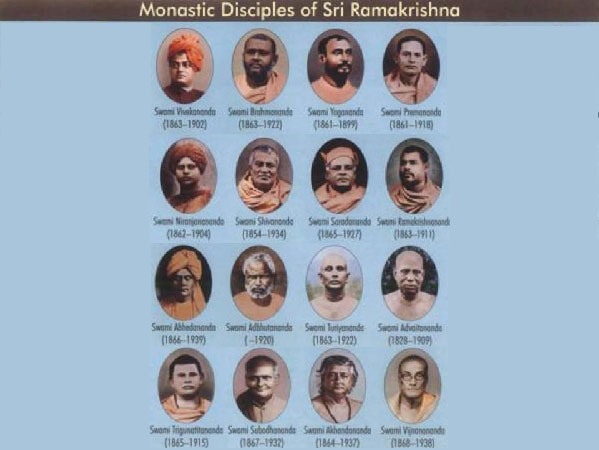
Direct Disciples
Vivekananda Ashrama
The Tradition of Guru-Shishya Parampara in Sri Ramakrishna’s Teachings
In India, spiritual knowledge has been passed down through a tradition called Guru-Shishya Parampara. This means Teacher-Student or Master-Disciple. A spiritual teacher is a wise person who shares their knowledge with a capable disciple.
Sri Ramakrishna had two types of disciples: householders and young men. For householders, he didn’t suggest total renunciation. He wanted them to fulfill their family responsibilities. Their renunciation was meant to be mental.
For young men who were to become monks, he taught the difficult path of renunciation. They needed to vow to be completely celibate and avoid greed and lust. By practicing self-control, they could understand the deeper mysteries of God.
Sannyasis, or monks, are expected to be role models. Their lives should be free from faults. They should not even look at pictures that might stir their passions. Sri Ramakrishna chose young men who were not influenced by “woman and gold” to become his monks. He kept householders away while teaching the monks about renunciation and discrimination.
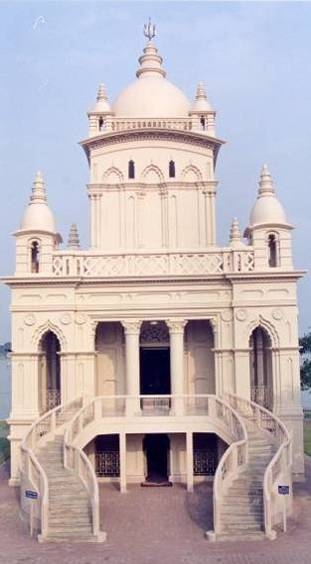
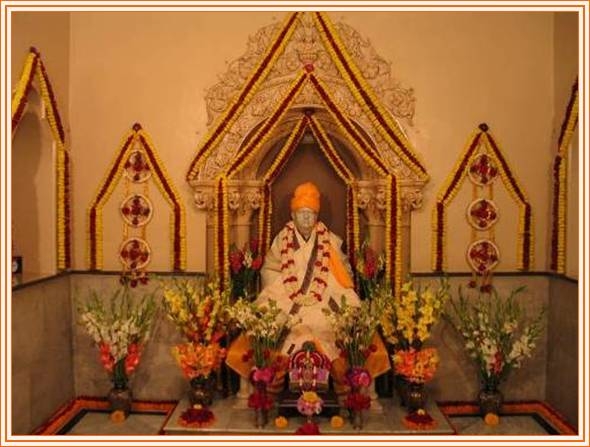
Samadhi Pitha at Belur Math where some of the Direct Disciples of Sri Ramakrishna were cremated.
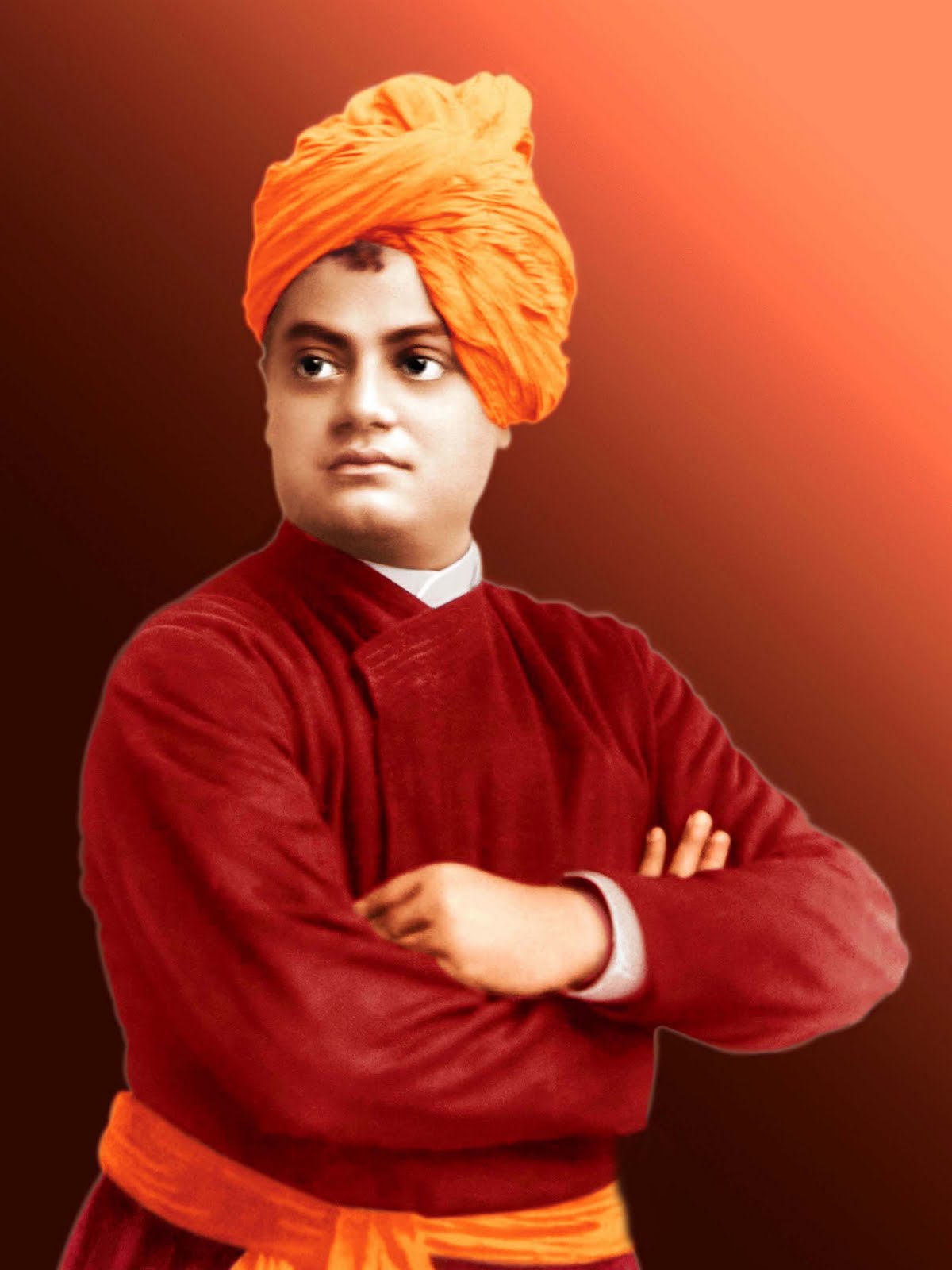
Swami vivekananda-the light of hope (1863 – 1902)
Swami Vivekananda was an important figure in India during the late 19th century. He helped restore the nation’s pride and confidence. Born on January 12, 1863, he was raised by a caring father and a deeply religious mother. From a young age, he searched for spiritual perfection.
In 1882, he met Sri Ramakrishna, his spiritual teacher. For the next four and a half years, Ramakrishna guided him, shaping him into a great disciple. Narendra, as he was called, learned a lot and fully submitted to his guru.
Following Sri Ramakrishna’s advice, Narendra and his friends started a monastery in 1886 in Baranagore, near Calcutta. In 1892, he traveled as a wandering monk and reached Kanyakumari, the southern tip of India. There, while meditating on a rock, he discovered his life’s mission.
Things moved quickly after that. On May 31, 1893, he sailed to America. At the World Parliament of Religions in Chicago that September, he made a big impact. After traveling through America and England, he returned to India on January 15, 1897.
Over the next five years, Swami Vivekananda inspired many people through his speeches and writings, which are collected in eight volumes known as The Complete Works of Swami Vivekananda. In 1897, he founded the Ramakrishna Mission, and in 1899, he dedicated the Belur Math, the monastery’s headquarters. He passed away on July 4, 1902, leaving a lasting legacy that continues through the Ramakrishna Math and Mission, promoting self-realization and the good of humanity.
Teachings of Swami Vivekananda
- Path to Devotion: One way to develop devotion (bhakti) is by repeating God’s name and using mantras. It’s also helpful to spend time with holy people and read spiritual books like the Gita.
- Self-Faith: Our first duty is to believe in ourselves. If we lack self-confidence, we can’t truly believe in God. Faith in oneself is essential for spiritual growth.
- Duty as Worship: Every duty is sacred. Doing our duties with devotion is one of the highest forms of worship.
- True Education: Education is about bringing out the perfection that is already within us. It’s more about focusing our minds than just collecting facts.
- Importance of Faith: Faith in ourselves and God is the key to greatness. We need to stand strong on this faith to succeed.
- Cultural Values: A strong society respects motherhood and values marriage. Renunciation and service are the main ideals in India; by focusing on these, everything else will fall into place.
Swami Brahmananda: The First Leader of the Ramakrishna Movement (1863-1922)
Swami Brahmananda, known as Rakhal Chandra Ghosh before becoming a monk, was the first President of the Ramakrishna Order. He was born on January 21, 1863, in a wealthy family near Calcutta. While in high school, he became friends with Narendranath, who later became Swami Vivekananda. From a young age, Rakhal showed a deep interest in spirituality, which affected his studies.
His father arranged an early marriage for him, hoping it would distract him from his spiritual pursuits. Surprisingly, this marriage led him to meet Sri Ramakrishna, who recognized him as his “Spiritual Son,” as shown to him by the Divine Mother. Under Sri Ramakrishna’s loving guidance, Rakhal had many spiritual experiences.
After Sri Ramakrishna passed away, Rakhal and his friends took monastic vows and became Swami Brahmananda. He spent years traveling as a wandering monk, practicing strict spiritual disciplines. Before Swami Vivekananda returned from the West, Rakhal came back to Baranagore Math.

When Swami Vivekananda established the Ramakrishna Mission, he trusted Rakhal to help run it, remembering that Sri Ramakrishna had once said Rakhal could rule a kingdom. Swami Brahmananda’s wisdom helped the organization grow and flourish. He worked hard and worshipped sincerely, guiding many spiritual seekers along the way. He passed away on April 10, 1922, leaving a lasting impact on the Ramakrishna Order.
Teachings on Mind and Spiritual Practice by Swami Brahmananda
- Mantra for Focus: Repeating a mantra helps your mind stay focused. Without it, your thoughts can wander easily.
- Mind’s Learning: Your mind can learn and be influenced by what you teach it. It can find joy in spiritual life instead of worldly things.
- Discrimination: By understanding the difference between what truly matters and what doesn’t, you can guide your mind towards God.
- Solitude for Clarity: Spending time alone helps to calm your mind. It’s important to control your cravings and think deeply.
- Work as Worship: Work and worship should go together. Don’t be afraid of work; see it as a way to serve God.
- Dedication: When you dedicate your work to God, it becomes easier to overcome any reluctance you have about doing it.
The Life of Swami Premananda: A Spirit of Universal Love (1861 – 1918)
Swami Premananda, originally named Baburam, was known for his deep love for everyone. He was born into a wealthy family on December 10, 1861. After completing his early schooling in his village, he moved to Calcutta for higher education at the Metropolitan Institution. There, he had a great headmaster, Sri ‘M’, and a close friend named Rakhal (Swami Brahmananda).
Rakhal introduced Baburam to Sri Ramakrishna, who recognized his strong spiritual potential. This connection fueled Baburam’s desire for spirituality, which he had felt since childhood. After Sri Ramakrishna passed away, Baburam joined his fellow disciples, including Narendranath (Swami Vivekananda), and took on the name Swami Premananda.
He spent much of his life in various monasteries like Baranagore, Alambazaar, and Belur, where he managed worship and helped train new monks. His caring, motherly nature made him beloved by many. He inspired young people in East Bengal (now Bangladesh) to serve society through voluntary work.
Despite his high spiritual achievements, he was humble and rarely talked about them. Sadly, he passed away from a serious illness called Kala Azar on July 30, 1918. His life was a shining example of love and service to others.

True Devotion: Life Lessons from Swami Premananda
- Follow the Teachings: To truly honor your spiritual teacher, practice what they taught. It’s not enough to just offer flowers or feel emotional for a moment.
- Actions Over Words: You can’t become a true devotee of God just by dancing, jumping, or quoting scriptures. What matters is letting go of selfishness and ego.
- This Is an Action Age: We live in a time when action is essential. It’s not just about talking or writing; it’s about doing.
- Live the Teachings: The examples set by the Master and Swamiji show that we should let our actions speak louder than words.
- Help Everyone: Focus on the poor, weak, fallen, and ignorant. Make them your priority. But remember, while you help one group, don’t develop hatred towards another, like the rich.
- Be Balanced: Love for one section of society should not lead to dislike for another. True devotion includes caring for everyone equally.
Swami Yogananda: A Devoted Disciple (1861 – 1899)
Swami Yogananda, born in 1861, was a special disciple of Sri Ramakrishna and the first initiated disciple of Sri Sarada Devi, known as the Holy Mother. He came from a once rich Brahmin family that was now poor. Despite this, he was gentle, shy, and very focused on his spiritual life.
One day, while trying to pick a flower in the Dakshineswar garden, he met Sri Ramakrishna, whom he thought was just a gardener. This meeting changed his life forever. Although he was married, he never let the world distract him from his spiritual goals.
Sri Ramakrishna recognized that Yogananda’s gentle nature needed a bit of strength to survive in the world. So, he helped him grow stronger. Yogananda was not just a follower; he was also very smart and could think critically, even about his teachers when he felt it was necessary.
He was a great organizer and inspired many young men to join the monastic life. His greatest devotion was to the Holy Mother, whom he served until his last day. Sadly, his health wasn’t strong enough for the hardships he chose, and he passed away on March 28, 1899. Yogananda’s life was filled with deep spiritual experiences, even if he often kept them private.

Swami Niranjanananda: A Journey from Spiritualism to Devotion
Swami Niranjanananda was one of those few disciples whom Sri Ramakrishna termed as Nityasiddhas or Ishwarakotis —that is, souls who are perfect from their very birth and are not caught by Maya at any time. With particular reference to Niranjanananda, the Master once said that he was born with the characteristics of Rama inherent in him.
The early name of Swami Niranjanananda was Nityaniranjan Ghosh, and he was usually called by the shortened form Niranjan. He came from Rajarhat-Vishnupur, a village in 24 Parganas, but lived in Calcutta with his uncle Kalikrishna Mitra.
Niranjan was about eighteen years old when he met the Master for the first time. He had a very majestic appearance—being a tall figure with broad shoulders and a strong physique. Though a boy, fearlessness beamed through his eyes.
Sri Ramakrishna was surrounded by a circle of devotees when Niranjan came to him. In the evening when all the devotees dispersed, the Master turned to Niranjan and inquired all about him. Coming to know about his interest in spiritualism, he told young Niranjan,
‘My boy, if you think of ghosts and spooks, ghosts and spooks you will become. And if you think of God, divine will be your life. Which do you prefer?’
‘Of course, the latter’ replied Niranjan. Thereupon Sri Ramakrishna advised Niranjan to sever all connections with the spiritualists, to which Niranjan agreed.
At the very first meeting, the Master talked with Niranjan as if he had known him for a long time. Sri Ramakrishna, seeing that it was getting dark, pressed Niranjan to pass the night at Dakshineswar. But Niranjan could not do so lest his uncle should be anxious for him. He, however, promised to come again.
Swami Saradananda: A Dedicated Leader of the Ramakrishna Mission (1865 – 1925)
Swami Saradananda, born Sharat Chandra Chakravarti on December 23, 1865, in Calcutta, was a key figure in the Ramakrishna Mission. He came from a wealthy Brahmin family and studied at the Metropolitan College with his cousin, Shashi, who later became Swami Ramakrishnananda.
Their lives changed when they met Sri Ramakrishna in October 1883. This friendship deepened their spiritual goals. Sharat was skilled in caring for the sick and played a crucial role in looking after Sri Ramakrishna during his final illness. After the Master’s passing, he joined the monastic order led by Swami Vivekananda, taking the name Swami Saradananda.
He spent time as a wandering monk practicing austerities before being sent to the West by Swami Vivekananda. He successfully spread the teachings of Sri Ramakrishna in London and New York. In 1898, he returned to India to serve as the General Secretary of the Ramakrishna Math and Mission.
Swami Saradananda was known for his deep devotion to the Holy Mother, Sri Sarada Devi. He worked hard to build her residence in Calcutta and wrote the important book Sri Ramakrishna Lilaprasanga to repay his debts.
His gentle nature and calm demeanor made him a beloved leader. He passed away on August 19, 1927, after successfully hosting a Ramakrishna Mission Convention at Belur Math.

Life Lessons From Swami Saradananda
Purification Through Selfless Work: Engaging in selfless work helps to purify the mind, leading to greater knowledge and devotion.
Identifying Bad Work: Any work that distracts from God-realization or creates discontent should be completely discarded.
Apolitical Stance: The Ramakrishna Mission remains neutral on political matters, following the guidance of Sri Ramakrishna and Swami Vivekananda to focus on spirituality and service.
Commitment to Spirituality: The Mission prioritizes spiritual growth and humanitarian service over political involvement.
Sincerity in Religion: Many religious societies fail to maintain interest because their teachings do not align with their actions. True sincerity is essential.
First Step in Religion: Being completely sincere in thoughts and actions is the foundational step for any genuine spiritual practice.
Swami Shivananda: A Life of Devotion and Service (1854 – 1934)
Swami Shivananda, also known as ‘Mahapurush Maharaj,’ was born around 1854 in Barasat, West Bengal, into a deeply religious family. His original name was Tarak, and he received a good education. While working in Calcutta, he had the chance to meet Sri Ramakrishna, who recognized him as the son of an old friend. With his father’s approval, Tarak became a disciple of Sri Ramakrishna.
After the Master’s passing, he was the first to join the Baranagore monastery and was given the name Swami Shivananda. Despite being married, he practiced celibacy, earning the title ‘Mahapurush’ from Swami Vivekananda. Tarak traveled as a monk but settled at the monastery in 1897 after Swami Vivekananda’s return from the West. He also preached Vedanta in Sri Lanka and helped with plague relief work in 1899.
From 1922 to 1934, he served as the second President of the Ramakrishna Order. During this time, he initiated many people and offered spiritual support to countless devotees. Swami Shivananda passed away on February 20, 1934, after a long illness. Throughout his life, he remained aware of the divine presence, showing that the inner life of a holy man is felt deeply, beyond words.

Key Teachings on Spiritual Practice by Swami Shivananda
Ignore Negative Thoughts: Low or negative thoughts will come and go; don’t dwell on them. Focus on staying positive.
Seek Strength Through Practice: With constant practice and the grace of the Lord, you will gain strength and resilience in your spiritual journey.
Engage in Devotion: Devote your mind fully to practices like japa (chanting), meditation, worship, and studying scriptures. Choose what feels right for you at the moment.
Importance of Love: While repeating mantras mechanically can yield some benefits, true devotion and love for the Lord make the practice more meaningful and effective.
Power of Prayer: Pray sincerely for strength, knowledge, and a sense of detachment from worldly desires. Genuine prayer can bring about transformation.
Accessibility of Spiritual Growth: Not everyone can practice extreme austerities, but through heartfelt prayer, anyone can attain spiritual goals and divine grace.
Swami Ramakrishnananda: A Devoted Leader (1863 – 1911)
Swami Ramakrishnananda, originally named Shashibhushan, was born on July 13, 1863, in an orthodox Brahmin family in Bengal. He had a strong education and a noble character. Swami Vivekananda once considered taking the name “Ramakrishnananda” but gave it to Shashi for his devoted service to Sri Ramakrishna.
Shashi’s deep devotion was especially evident during Sri Ramakrishna’s last days. He cared for the Master tirelessly and continued to worship him through the relics after his passing. When the relics were placed in the Baranagore monastery, Shashi took on the responsibility of their worship and looked after his fellow monks with great love and care.
At the request of Swami Vivekananda, Shashi moved to Madras to establish a new monastery. Through his hard work, dedication, and scholarship, he laid a strong foundation for the monastery, even facing many challenges. He also sparked interest in Sri Ramakrishna’s teachings in Mysore, leading to the establishment of a Math there.
Swami Ramakrishnananda was a blend of deep devotion and high intellect. Despite his strict discipline, he had a soft, caring heart. His relentless efforts to build the Madras Math eventually took a toll on his health, and he passed away on August 21, 1911.

Teachings by Swami Ramakrishnananda
Childlike Devotion: The best example of devotion is a child’s love for its mother. Just as a baby seeks its mother for comfort and help, we should turn to God with the same trust.
Understanding God: We approach God because we recognize that He is our true friend who can help us when no one else can, similar to how a child relies on his mother.
Need for Ideals: Without a strong ideal to follow, we may succumb to our lower instincts and become slaves to worldly pleasures.
Transformation Challenge: Worshipping the body and material desires has been ingrained in us for many lifetimes, making it difficult to shift our focus to the true God.
Self-Elevation: To elevate ourselves spiritually, we must discipline the body and gain control over our senses.
Crucifixion of the Ego: This process involves letting go of our attachment to physical desires and ego, allowing us to connect with the divine.
Swami Abhedananda: A Multifaceted Yogi (1866 – 1939)
Swami Abhedananda, born Kaliprasad Chandra on October 2, 1866, in Calcutta, was a talented and devoted disciple of Sri Ramakrishna. His parents were deeply devoted to Mother Kali, which influenced his spiritual path from a young age. He loved studying Sanskrit and later explored both Eastern and Western philosophy.
Drawn to the idea of becoming a yogi, he sought out Sri Ramakrishna, who recognized his potential and welcomed him as a disciple. After the Master’s passing, he took sannyasa and became Swami Abhedananda, gaining the nickname “Kali Tapasvi” for his deep study and contemplation.
Swami Vivekananda saw his potential and chose him to continue the work in the West. Abhedananda’s first talk on Advaita Vedanta in London was a great success. He then moved to New York, where he lectured extensively for 25 years, attracting many intellectuals and seekers of truth.
In 1921, he returned to India and established the Ramakrishna Vedanta Society in Calcutta to continue his work. He was known for his intellectual insight, devotional fervor, and yogic introspection. Swami Abhedananda passed away on September 8, 1939, marking the end of an era for the direct disciples of Sri Ramakrishna.

Teachings of Swami Abhedananda
Faith and Devotion: To build strong faith and devotion to the Lord, it’s important to practice tapasya, which involves disciplined austerities.
Meaning of Tapasya: Tapasya is not just wandering; it involves regular practices like japa (chanting), meditation, and self-control.
Importance of Work: Don’t be afraid to work. Engaging in work helps purify the mind and is essential for gaining true knowledge.
Mind’s Influence: The mind travels with you wherever you go, so it’s vital to keep it focused and disciplined.
Purification through Action: Work helps to cleanse the mind of distractions, making it easier to connect with spiritual truths.
Steadfastness: Consistency in your spiritual practices is key to developing a deeper connection with the divine and achieving inner peace.
Swami Adbhutananda: A Life of Wonder
Swami Adbhutananda, known as Latu before he became a monk, was called the greatest miracle of Sri Ramakrishna. He grew up as an orphan and didn’t even know how to read or write, yet he became a wise saint. This transformation was seen as a miracle by many.
Born in a small village in Bihar, Latu was taken to Calcutta by his uncle. There, he worked as a servant for a devoted follower of Sri Ramakrishna. This environment helped him discover his spiritual side. While running errands to Dakshineswar, he met Sri Ramakrishna, who welcomed him as a disciple. Latu served the Master with deep devotion.
After Sri Ramakrishna passed away, Latu took vows as a monk and became Swami Adbhutananda. He lived simply and spent most of his time at Dakshineswar, meditating and practicing austerity. For nine years, he stayed at the home of another devotee, Balaram Bose, where many seekers came to learn from him.
Swami Adbhutananda spent his last days in Varanasi and passed away on April 24, 1920, leaving behind a legacy of faith and wisdom.

Teachings From Swami Adbhutananda
Dependence on God: Prayer and meditation are only meaningful if you rely on God. Without this dependence, all spiritual practices lose their significance.
Avoiding Fault-Finding: Criticizing others is considered a sin. Those who often find faults in others typically lack good actions themselves and may spread negativity.
Value of Devotion: It is more important to sincerely call upon the Lord with devotion than to merely know or recite religious phrases or rituals.
Inner Transformation: True spiritual growth comes from a genuine connection with God, not just external practices or words.
Self-Reflection: Instead of focusing on others’ flaws, one should look inward to improve oneself and cultivate positive qualities.
Authentic Spirituality: A heart filled with love and devotion is far more valuable than just knowledge of religious texts or doctrines.
Swami Advaitananda: Journey of Devotion and Service(1828 – 1909)
Swami Advaitananda, born Gopal Chandra Ghosh in 1828, faced deep sorrow when he lost his wife. This heartbreak led him to seek comfort in Sri Ramakrishna, starting a significant spiritual journey. Despite being older than Sri Ramakrishna, Gopalda maintained unwavering respect and devotion towards his guru. His commitment was instrumental in forming the future Ramakrishna Order of Monks. He gifted ochre cloths to Sri Ramakrishna, who distributed them to his disciples during his final days.
After Sri Ramakrishna’s passing, Gopalda was one of the first to join the Baranagore monastery alongside Swami Shivananda. He received the monastic name ‘Swami Advaitananda’ and spent time at various monasteries, including Varanasi and the newly established Math at Belur.
Though his age limited his active involvement in missionary work, he was known for his personal cleanliness and organized approach, qualities admired by Sri Ramakrishna. Swami Advaitananda dedicated his life to spiritual practice and service, embodying the values of devotion and discipline.
He passed away on December 28, 1909, at the age of eighty-one, leaving behind a legacy of faith and commitment to the teachings of Sri Ramakrishna.

Life Lessons from Swami Advaitananda
Finding Strength in Grief: Crisis moments can lead to spiritual awakening; sorrow can guide you to seek higher truths.
Devotion to the Guru: Maintain unwavering respect and devotion towards your spiritual teacher, recognizing their role in your growth.
Simplicity in Service: Embrace a life of cleanliness and organization in your actions, reflecting inner discipline and purity.
Importance of Community: Engage with fellow seekers and share in the collective journey of spiritual growth and understanding.
Gift of Spiritual Cloths: Simple acts of devotion, like giving ochre clothes, can have profound spiritual significance and connect one to the larger community of seekers.
Lifelong Learning: Spiritual practice is a lifelong journey that requires continuous effort and dedication, regardless of age.
Swami Turiyananda: A Life of Devotion and Austerity (1863 – 1922)
Swami Turiyananda, born Harinath Chattopadhyaya on January 3, 1863, came from a religious Brahmin family. From a young age, he followed strict orthodox practices but felt a deep desire for liberation. This longing led him to Sri Ramakrishna, who quickly became a guiding light in his life. The Master helped him overcome two major issues: his dislike for women and his over-reliance on self-effort.
After becoming a monk, Harinath took the name Swami Turiyananda. He traveled extensively as an itinerant monk, practicing severe austerities and studying scriptures. Although he initially hesitated to engage in missionary work, the love and encouragement of Swami Vivekananda inspired him to join in these efforts. He played a key role in establishing the Shanti Ashrama in California during his three years in the United States.
Upon returning to India, Turiyananda dedicated his life to austerity and training younger monks. His deep faith in the Divine Mother, strong spirit of renunciation, and understanding of scriptures made a lasting impact on all who met him. Known for his remarkable control over his body and mind, he became a respected figure in the spiritual community. Swami Turiyananda passed away on July 21, 1922, leaving behind a legacy of devotion and wisdom.

Life Lessons by Swami Turiyananda
Stay Humble: Don’t be proud of controlling your passions; this pride can cause them to resurface. Always pray for divine help to maintain your control.
Complete Surrender: True devotion requires total self-surrender to God. If you believe God is the Inner Controller, trust Him fully without fear.
Practice Generosity: Don’t expect anything in return from others. Instead, focus on giving; this helps prevent feelings of emptiness or dryness in your spirit.
Guard Your Mind: While it’s good to give to others, reserve your mind and thoughts solely for God. This keeps your focus and devotion strong.
Value Service: Engaging in work with a spirit of service can be just as effective for spiritual growth as meditation and japa (repetition of God’s name).
Seek Balance: Combine both service and personal devotion to enhance your spiritual journey, ensuring a well-rounded approach to connecting with the divine.
The Courageous Life of Swami Trigunatitananda (1865 – 1914)
Swami Trigunatitananda, born Sarada Prasanna in 1865, sought peace at Dakshineswar after losing a gold watch. Guided by Master Mahashaya, he met Sri Ramakrishna and felt a deep connection. Despite his family’s attempts to dissuade him from becoming a monk, he remained steadfast and embraced monastic life.
Known for his strong will and adventurous spirit, he often faced dangerous situations. He even had surgery for a fistula without anesthesia, showing his courage. Swami Trigunatitananda cared little for his comfort and focused on serving others. His relief work during a crisis in Dinajpur (now in Bangladesh) highlighted his dedication.
At the request of Swami Vivekananda, he started “Udbodhan,” a monthly publication for the Ramakrishna Order, and helped it grow. When Swami Turiyananda returned from San Francisco, Trigunatitananda took charge of organizing Vedanta work there and built the first Hindu temple in the West.
Tragically, his life ended suddenly on January 10, 1914, when a madman threw a bomb, taking away a great soul dedicated to service and spirituality.

Life Lessons from Swami Trigunatitananda
Importance of Sincerity: The disciple’s earnestness and sincerity are crucial for spiritual progress, regardless of the guru’s status.
Guru’s Qualifications: A good guru who has attained perfection can initiate followers from all castes, emphasizing inclusivity.
Unity Beyond Caste: True devotees and perfected souls transcend caste distinctions; they are united with the divine.
Merging with God: When individual souls merge into God, they lose their individuality, making caste distinctions irrelevant.
Body vs. Soul: Caste is tied to the physical body and does not pertain to the eternal soul, highlighting the importance of spiritual identity.
Spiritual Equality: The teachings promote the idea that spiritual truth and devotion are accessible to all, regardless of caste or background.
Swami Akhandananda: A Life of Service
Swami Akhandananda, born Gangadhar Ghatak on September 30, 1864, in Calcutta, dedicated his life to alleviating the suffering of others. His desire was not for earthly power, heaven, or even salvation, but solely for the removal of miseries, reflecting the spirit of the great devotee Prahlada.
Deeply religious from a young age, Gangadhar was guided by Sri Ramakrishna to befriend Swami Vivekananda, who would become a lifelong friend. After Sri Ramakrishna’s passing, Gangadhar embraced monastic life, taking the name Swami Akhandananda. He spent three years wandering in the Himalayas and even traveled to Tibet.
Inspired by Swami Vivekananda’s call to serve the poor and illiterate, Akhandananda worked tirelessly for education in Khetri and Udaipur. He established an orphanage in Sargacchi during famine relief efforts, where he and the institution thrived together.
Elected as the third President of the Ramakrishna Order after Swami Shivananda’s death, Akhandananda was known for his language skills, childlike simplicity, and dedication to scholarship. He passed away on February 7, 1937, leaving behind a legacy of service and compassion.

Lesson from Swami Akhandananda (1864-1937)
Harmony of Paths: The spiritual path today requires a balance of knowledge, devotion, and selfless work. All three elements are essential; focusing on just one is not enough.
Importance of the Lord’s Name: In this age of Kali, chanting the Lord’s name is vital. Regular repetition, starting with a manageable number like 108, is encouraged for spiritual growth.
Value of All Work: No work should be seen as degrading. Every task, big or small, is an opportunity to serve the Divine.
Role Model: Swami Vivekananda exemplified this by engaging in humble tasks, like cleaning vessels, demonstrating that all work can be sacred.
Mindset in Work: When performing daily chores, consider them as acts of worship. This mindset transforms routine tasks into spiritual service.
Gradual Progress: Increase your efforts in chanting and service over time, knowing that consistent practice will yield spiritual fruits.
Swami Subodhananda: A Life of Compassion (1867-1932)
Swami Subodhananda, born Subodh Chandra Ghosh on November 8, 1867, in Calcutta, was a deeply spiritual person from a religious family. His life changed when he read about Sri Ramakrishna and quickly sought to meet him at Dakshineswar. During their first visits, Sri Ramakrishna recognized Subodh’s spiritual potential and guided him into deep meditation.
At the request of Swami Vivekananda, Subodh spoke to a gathering of monks, coincidentally during the earthquake of 1897, which made the moment memorable. Known for his compassion, love, and wisdom, he became a source of support for those in despair.
After joining the Baranagore monastery, he was given the name Swami Subodhananda. His childlike nature earned him the affectionate nickname “Khoka Maharaj,” meaning “Child King.” He led a life of service, participating actively in relief efforts through the Ramakrishna Mission. He was particularly generous in offering spiritual initiation to those from weaker sections of society.
Swami Subodhananda passed away on December 2, 1932, leaving behind a legacy of kindness and devotion to helping others.

Life learnings from Swami Subodhananda
Preparation for the Divine: Before entering the heart of a devotee, the Lord fills it with devotion, faith, and love.
Symbol of Royal Favor: This act is likened to a king sending gifts to a subject’s house in anticipation of a visit, symbolizing the importance of the devotee to the Lord.
Divine Bestowal: The Lord bestows these qualities on His devotees, recognizing their readiness to welcome Him.
Necessary Attributes: Devotion, faith, and love are essential for anyone seeking a close relationship with the Divine.
Gratitude for Grace: The presence of these qualities reflects the Lord’s grace, as they are not naturally possessed by the devotee.
Invitation to the Lord: By filling the heart with these virtues, the Lord prepares the devotee for a profound spiritual connection.
Swami Vijnanananda: A Life of Service and Scholarship
Swami Vijnanananda, born Hariprasanna Chattopadhyaya on October 28, 1868, in Belgharia, Calcutta, was destined for a spiritual life. Early encounters with Sri Ramakrishna revealed his potential as a future monk. He initially worked as a District Engineer but felt drawn to the teachings of the Master.
After renouncing worldly life in 1896, he joined the Ramakrishna Math at Alambazar and was given the name Swami Vijnanananda. His engineering skills were invaluable, as Swami Vivekananda entrusted him with building the Math campus and a memorial temple for Sri Ramakrishna. Although the project faced delays, it was eventually completed and dedicated by Vijnanananda in January 1938.
He spent nearly ten years in Allahabad, guiding a group of young men in their moral and spiritual upliftment, leading to the establishment of a permanent Ramakrishna Math branch there in 1910. A scholar in various fields, including Sanskrit and astrology, he became the President of the Ramakrishna Order in 1937.
Swami Vijnanananda passed away on April 25, 1938. His body was consigned to the sacred waters of the Triveni, marking the end of a life dedicated to service, spirituality, and scholarship.

Teachings of Swami Vijnanananda
Acceptance Over Request: One should not ask God for anything but remain content with what He provides. Asking for gifts can lead to misfortune if not used wisely.
Service to Others: No matter the situation, individuals can serve their country, the community, and God. Cultivating a mindset focused on the welfare of all should be part of daily prayers.
Faith and Simplicity: The decline of society can be attributed to harmful religious theories that erode faith. A call for simplicity, faithfulness, and purity of heart is essential.
Detachment from Materialism: Detaching the mind from material possessions allows one to perceive the light of God in everything.
Worldly Attachment: Being attached to worldly things can lead people away from God and cause suffering, much like being scorched by a wildfire.
Proper Use of Resources: Real welfare comes from using resources wisely and in alignment with spiritual values to avoid misfortune.